
Water damage restoration in Lakewood, CO
We stop the leak, dry out the wet walls and floors, and repair your Lakewood home so it looks the way it did before.
The short answer
Water damage restoration means stopping the water, removing what it soaked, drying the structure, and repairing the rooms it touched. At Your Service Plumbing Company does this work for homes in Lakewood, CO, so the damage is cleaned up and your property returns to its pre-damage condition.
How the job works
What does water damage restoration involve?
Most water damage starts with a plumbing failure: a burst supply line, a leaking water heater, an overflowing toilet, or a pinhole in a pipe inside a wall. The first job is to shut off the water and find the source. Drying a room while it still leaks only wastes effort.
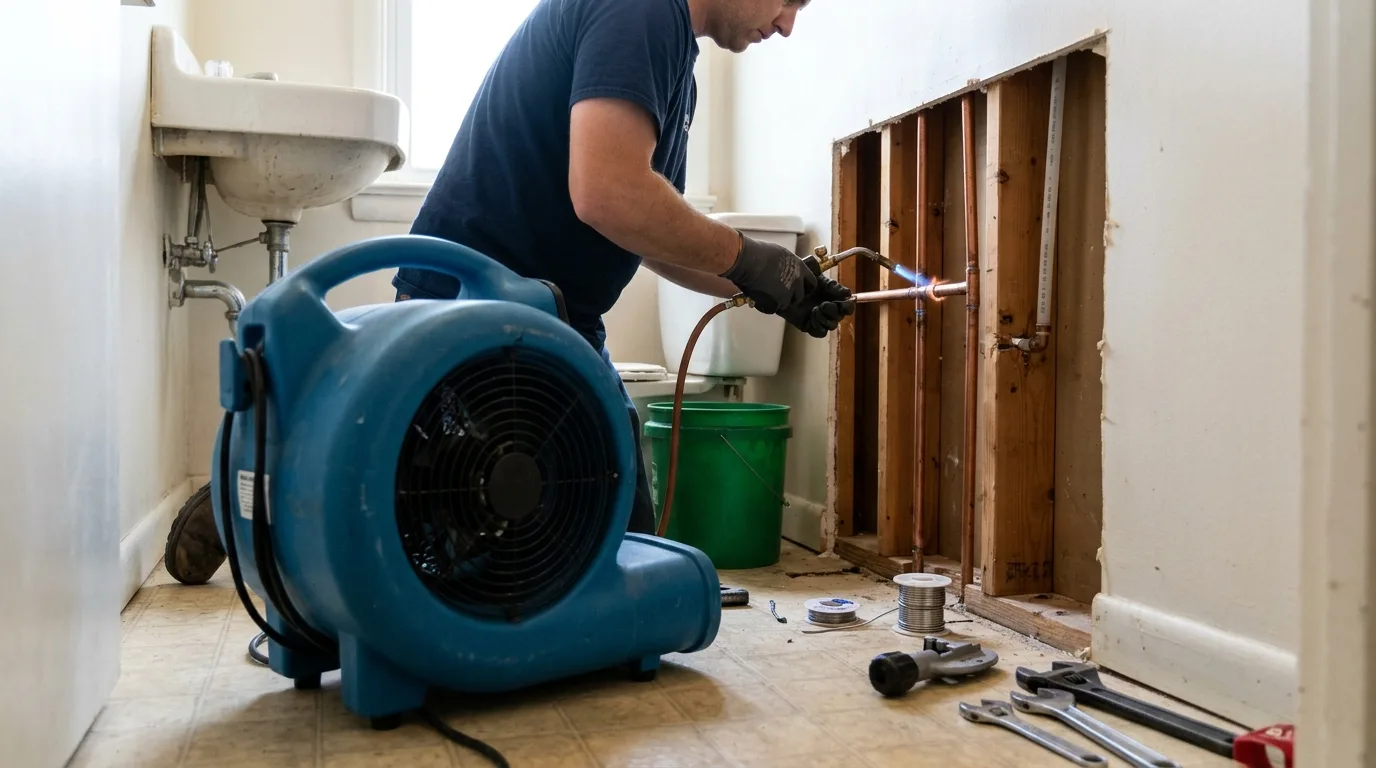
Next comes the wet material. Standing water is pumped out, soaked carpet pad and baseboards are pulled, and drywall that has gone soft is cut away. Fans and dehumidifiers then dry the framing and subfloor, and a moisture meter shows when the wood is truly dry.
Once everything reads dry, the room is rebuilt with new drywall, paint, flooring and trim, so the space matches how it looked before the damage.
- Stop the water sourceThe leak is shut off and traced to its pipe, fixture or appliance so no more water comes in.
- Remove standing waterPumps and wet vacuums clear the floor, and soaked carpet, pad and damaged baseboards come out.
- Dry out the structureAir movers and dehumidifiers run on walls and floors while a moisture meter confirms the framing is dry.
- Repair and rebuildDrywall, paint, flooring and trim are replaced so the room returns to how it looked before.
When to call
When should you call about water damage restoration?
Call as soon as you see water or its aftermath, because wet drywall and subfloor can grow mold and warp as days pass.
- Standing water on the floorAny pooled water from a burst pipe, backed-up drain or failed appliance needs to be removed and its source stopped.
- Stains spreading on ceilingsA brown ring that grows or a sagging patch of drywall means water is still collecting above it.
- Musty smell in a roomA damp, earthy odor often points to wet insulation, carpet pad or framing you cannot see.
- Warped or buckling floorsHardwood that cups or laminate that lifts at the seams has absorbed water from below or beside it.
- Bubbling or peeling paintPaint that blisters on a wall usually has moisture trapped behind it, often from a leaking pipe.
Other services
More we can help with
A dry, repaired home that looks like it did before.
Serving Lakewood, CO. Hours and every way to reach us are on the contact page.